Bundle demo #
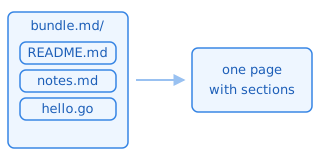
This post is a *bundle*: the directory posts/2026-10-22-bundle-demo.md/
holds several files, and all of them appear on this single page — like a
gist. This README.md is the face of the bundle and provides the title,
the description, and the prev/next navigation.
00-notes.mdis a companion note, rendered as Markdown.01-diagram.svgis an image, shown with<img>and served asimage/svg+xml.hello.gois a complete program, rendered as a code block and served raw.
The order is: README.md first, then the rest sorted by file name — so
00-, 01-, … prefixes control the sequence.
Inline SVG #
A code block fenced with svg is not a code block at all — it is the
image itself, rendered inline:
Any other fence name stays a code block:
<svg>this is only text</svg>What does *not* work #
Standard Markdown image syntax is not parsed — ! is just a character
and the [...](...) part is an ordinary link — the line below renders
as ! followed by a link to the file:
The same goes for an inline data:image/... URI — data: is not an
allowed link scheme here, so even the link is dropped and only its text
remains (a ! and the word "embedded"):
!embedded
Binary image formats (PNG, JPEG) cannot be bundle members either — a
member is stored as text, so .svg is the only image type a bundle can
carry.